I'm Ahmed White. Furnace operator out of Enumclaw, Washington — three decades keeping industrial heat under control so the stack stays honest and the crew goes home whole. This page is my journal: what the flame teaches when you stop treating it like a dial and start treating it like an instrument.
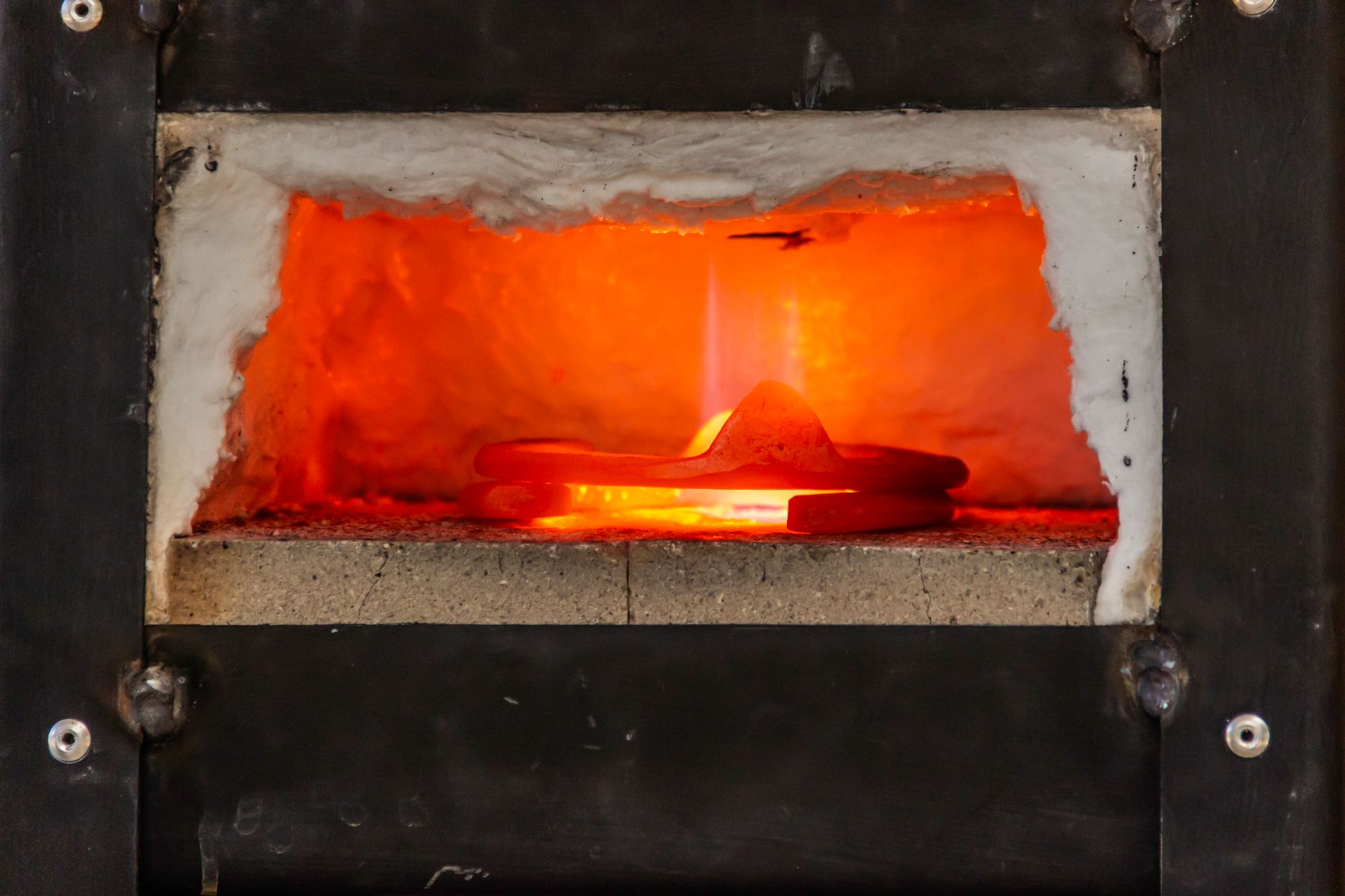
01Listening to the draft
Back in my day, a furnace that sang off-key meant air leaks, not alarms. The younger hands hear a whooshing and reach for the emergency stop. I hear a blues in the wrong key — and I set about finding which register is off before anybody gets hurt.
A balanced burner holds a patient, even hum — like a long sax note held without vibrato. An off-key draft skips, flutters, breathes ragged. That's the machine telling you where it aches, if you'll bother to listen. It's the line Andy Greer and his forty years of wrenches put better than I can: the creaks and hums ain't noise, that's the house tellin' you where it aches.

Look: my first film, reading-the-pulse, puts the listener's ear right up to the burner — jagged bars for an off-key draft, a patient hum for a balanced flame. Watch it on my 4ort.mov channel.
"Discipline isn't doing it all. It's knowing what to drop."
02The 1201 discipline — what I actually did that cold morning
There's a moment every operator carries with them, the one that cracks you open or seals you shut. Mine was a main burner tripping on a cold start. Instinct says run at it, throw every lever at once. My hands did the opposite.
- Kill the preheat fans first. Before anything. Your hard-earned heat is still in the brick — you don't vent it to the sky because you panicked.
- Then call maintenance. People matter more than a restart. My crew is my family twice over.
- Hold the stack. The discipline isn't saving everything — it's saving what keeps the stack from collapsing.
That's my 1201 moment. Three decades of heat taught me the hardest ignition there is isn't gas and air — it's the human decision to stay steady while the control board blinks red at you. The stack held that day. So did I.
03The operator's guide to furnace efficiency
Because efficiency isn't a slogan — it's the difference between a flame that works and a flame that wastes the fuel and the fume. I wrote the guide I wish I'd had handed to me at my first induction: furnace basics, what efficiency actually means, fuel economics, and the practical improvements that keep a plant ripping without a rebuild.
Read the full guide → Everything grounded, every number checked against the handbook, nothing that'll get you in trouble with OSHA.
- Know your heat sinks — the brick holds more than the metal does.
- Tune the draft, don't just read it — off-key means leaks.
- Waste heat is tuition — you pay it once to learn, then you recover it.
04The rest of the workbench
When the whistle blows, the heat follows me home in other shapes. There's the classic car half-borrowed from rust — a project waiting on my patience, one that hums when the timing is finally right. There's the jazz: Coltrane and Monk taught me more about combustion than any manual, because both are about how long you can hold a note without smothering it. And there's the quiet hour of meditation before shift, and the far dream of the trails of New Zealand — a place I'll walk slow when the furnace finally lets me go. A man who keeps his own engine tuned won't let the plant take all of him.